
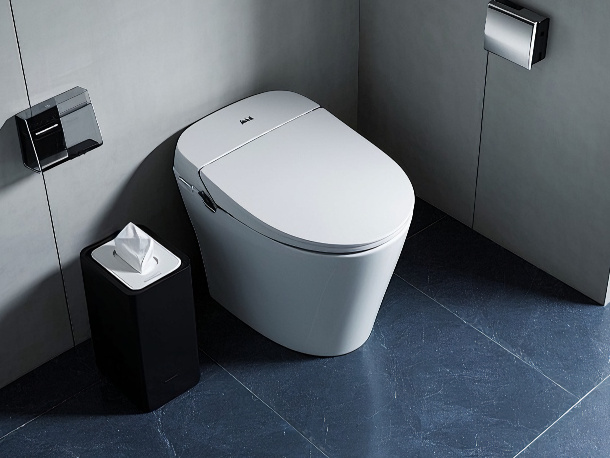
Quick answer: Floor-mounted smart toilets are generally more practical for projects using conventional floor drainage, renovation sites, and buyers seeking a simpler installation process. Wall-hung smart toilets are often suitable for new-build projects that prioritize open floor space, flexible installation height, and a cleaner architectural appearance. However, wall-hung systems require a compatible concealed frame, drainage layout, water and electrical planning, service access, and earlier coordination with contractors.
For distributors, wholesalers, bathroom brands, project buyers, and private label partners, the decision should not be based only on appearance. The selected structure affects drainage, wall construction, installation sequence, project schedule, maintenance access, packaging, accessories, and after-sales responsibility.
Both formats can include washing, heated seats, warm-air drying, automatic flushing, remote controls, sensors, and other smart toilet functions. The more important question is which installation structure matches the building and the buyer’s service capability.
What Is a Floor-Mounted Smart Toilet?
Conclusion: A floor-mounted smart toilet is supported by the bathroom floor and normally connects to a floor or rear drainage outlet according to the selected model.
The ceramic body rests on the finished floor, and the installation team secures, seals, and connects the toilet after confirming the rough-in distance, drainage position, water inlet, electrical outlet, and surrounding clearance.
Typical project advantages include:
- Compatibility with many conventional bathroom layouts
- Relatively straightforward installation sequencing
- Easier replacement in selected renovation projects
- Direct access to external water and electrical connections
- Familiar installation methods for many local contractors
Floor-mounted models are commonly considered for residential projects, apartments, hotels, renovation work, showrooms, and wholesale distribution where installation conditions vary between customers.
What Is a Wall-Hung Smart Toilet?
Conclusion: A wall-hung smart toilet is fixed to a concealed supporting frame, leaving the ceramic bowl suspended above the floor.
The supporting frame, drainage connection, water components, and selected control parts are normally installed behind a finished wall or service panel. The visible ceramic bowl is then mounted to the prepared structure.
Depending on the product design, the flushing and smart-function components may be arranged differently. Buyers should confirm the complete system rather than purchasing only the visible ceramic unit.
Which Option Is Easier to Install?
Conclusion: Floor-mounted models are usually easier for completed bathrooms, while wall-hung models are easier to coordinate before the wall is closed.
A floor-mounted smart toilet can often be installed after the floor, wall, drainage, and power points are completed, provided the dimensions match.
A wall-hung system requires earlier coordination. The support frame, drainage height, water line, electrical supply, finished-wall thickness, installation height, and service access must be confirmed before wall finishing.
For project buyers, late changes to a wall-hung specification may affect framing, waterproofing, tiling, drainage, and electrical work. Early approval is therefore essential.
How Do Drainage Requirements Differ?
Conclusion: Floor-mounted products often use conventional floor drainage, while wall-hung systems normally require drainage to be coordinated within or behind the wall structure.
Floor-mounted checks include:
- Finished-wall rough-in distance
- Drain outlet position and diameter
- Floor condition and sealing area
- Rear and side installation clearance
Wall-hung checks include:
- Drainage height and direction
- Frame and outlet compatibility
- Finished-wall thickness
- Service opening and concealed connection access
The project drawing should identify the actual product version. A general note such as “smart toilet” is not enough for accurate drainage construction.
Which Option Uses Bathroom Space More Efficiently?
Conclusion: Wall-hung products can create a more open floor area, while floor-mounted products may require less concealed construction depth.
A wall-hung bowl leaves the floor visible below the product, which can support easier floor cleaning and a lighter visual effect. Installation height may also be adjusted within the limits of the approved frame and product.
However, the concealed frame and service wall occupy depth behind the finished surface. In a compact bathroom, buyers should compare the complete wall build-up rather than only the visible bowl length.
A floor-mounted product occupies the floor directly but may avoid the need for an additional concealed wall structure.
Which Structure Is Better for Cleaning and Property Management?
Conclusion: Wall-hung products simplify access to the floor below the bowl, while floor-mounted products may provide easier access to selected external connections.
Hotels and property operators may value the open floor area around a wall-hung bowl. However, maintenance teams also need a clear method for reaching concealed valves, flushing components, electrical connections, and fixing points.
Floor-mounted models may leave fewer concealed project components, but the junction between the ceramic base and the floor still requires suitable sealing and cleaning procedures.
How Do Maintenance Requirements Compare?
Conclusion: Both structures require service planning, but wall-hung systems depend more heavily on correctly designed access panels and compatible concealed components.
For floor-mounted models, maintenance may involve the seat unit, washing module, sensors, control components, valves, hoses, power cable, flushing structure, and ceramic connections.
For wall-hung models, buyers should also confirm access to the concealed frame, water components, drainage connections, power supply, and any internal flushing mechanism.
Project maintenance documents should include:
- Component-location drawings
- Service-opening dimensions
- Removal and replacement instructions
- Compatible spare-parts references
- Water and electrical isolation procedures
Which Option Is Better for Hotels and Apartments?
Conclusion: Floor-mounted products often reduce construction coordination, while wall-hung products can support design-led projects with standardized concealed installations.
Hotels and apartments using repeated bathroom layouts can benefit from either structure. Floor-mounted models may be easier when the project already uses standard floor outlets. Wall-hung models can work well when the frame, wall depth, service access, and installation height are standardized across all rooms.
A trial room should be completed before large-scale installation. The project team should verify appearance, fixing, drainage, flushing, water supply, electrical location, controls, and maintenance access.
How Do Costs and Project Schedules Differ?
Conclusion: Wall-hung systems may require more concealed installation materials and coordination, while floor-mounted systems may simplify the construction sequence.
Buyers should compare the complete installed solution rather than only the smart toilet unit price. A wall-hung quotation may need to include the support frame, concealed flushing components, access panel, additional wall work, and contractor installation.
Floor-mounted models may reduce concealed-system costs, but project buyers must still consider drainage adaptation, electrical work, installation accessories, and site variation.
The cheapest product is not necessarily the lowest-cost project solution if it requires extensive rework.
How Do Packaging and Delivery Differ?
Conclusion: Floor-mounted products are commonly shipped as complete ceramic units, while wall-hung projects may involve several separately identified system components.
Wall-hung orders may include the bowl, seat and control unit, support frame, flushing parts, fixing accessories, remote control, and project-specific installation materials. Every component should be linked to the correct room or product version.
For phased projects, buyers should confirm whether concealed frames must arrive earlier than the visible ceramic units so that wall construction can proceed.
Can Both Types Support the Same Smart Functions?
Conclusion: Many washing, heating, drying, sensing, and control functions can be available on both structures, subject to the selected product design.
- Rear wash and feminine wash
- Water-temperature and pressure adjustment
- Heated seat and warm-air drying
- Nozzle self-cleaning
- Remote and side-panel control
- Automatic or foot-sensor flushing
- Automatic lid functions
- Night lighting
Buyers should evaluate flushing, installation, and service structure separately from the function list.
How Should Customized Versions Be Managed?
Conclusion: Customized products should identify the ceramic, frame, drainage, electrical, function, label, and packaging versions as one complete system.
For private label cooperation, a bathroom brand may customize logos, model names, manuals, cartons, remote-control artwork, functions, and accessories. Wall-hung projects may also require frame and installation documentation linked to the buyer’s commercial model.
Every approved version should use consistent information in quotations, drawings, labels, manuals, inspection records, and spare-parts lists.
How Should Buyers Evaluate the Supplier?
Conclusion: A suitable smart toilet supplier should explain the full installation system, not only the visible product.
- Complete dimensional and installation drawings
- Drainage and rough-in requirements
- Frame and concealed-system compatibility
- Water and electrical requirements
- Trial-installation support
- Packaging and phased-delivery planning
- Maintenance-access guidance
- Spare-parts and after-sales support
Project Selection Checklist
- New-build or renovation conditions confirmed
- Floor or wall drainage planned
- Structural support and frame approved
- Water, electrical, and service access coordinated
- Complete installed cost compared
- Trial room completed
- Installation documents and accessories checked
- After-sales parts and maintenance process prepared
How AF-KangMu Supports Project Buyers
AF-KangMu works with overseas distributors, wholesalers, bathroom brands, project buyers, and private label partners sourcing smart toilets and related smart bathroom products. Cooperation discussions can cover floor-mounted and wall-hung configurations, drainage, rough-in dimensions, frame requirements, functions, electrical versions, installation drawings, packaging, manuals, customization, and spare-parts planning.
Buyers can provide the project drawings, bathroom dimensions, drainage arrangement, wall structure, required functions, quantity, delivery phases, and customization needs so the suitable solution can be reviewed before sample approval and bulk procurement.
Conclusion
Floor-mounted smart toilets are generally more practical for conventional drainage, renovation work, and projects seeking a simpler installation sequence. Wall-hung smart toilets are suitable for new-build projects that value open floor space, adjustable installation height, and an integrated architectural appearance.
For wholesale distribution, engineering procurement, customization, or private label cooperation, contact AF-KangMu to discuss your project drawings, installation structure, required functions, quantities, and delivery plan.
FAQ
Are wall-hung smart toilets suitable for renovation projects?
They may be suitable when the wall, drainage, frame, power, and service access can be modified. Completed bathrooms may require more construction work.
Do wall-hung smart toilets require a support frame?
Yes, they normally require a compatible concealed frame designed to support the product and coordinate the drainage and installation points.
Which type is easier to maintain?
It depends on the design. Floor-mounted models may provide more direct access to selected connections, while wall-hung systems require properly planned service openings.
Which type is better for hotel projects?
Both can work. The decision should reflect drainage, construction stage, design requirements, installation standardization, maintenance access, and project budget.
Can floor-mounted and wall-hung products use the same smart functions?
Many functions can be available on both, but the exact configuration depends on the product structure and approved model.