
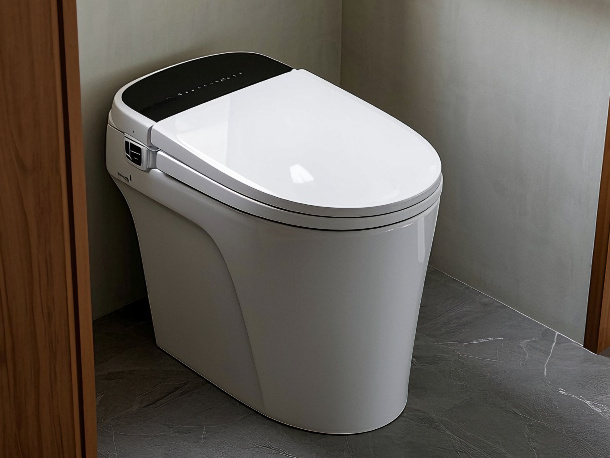
Quick answer: Smart toilets for wholesale distribution should be selected according to local installation conditions, target customers, price levels, inventory capacity, and after-sales resources. A practical wholesale range usually includes a focused entry model, a main-selling model, and a premium or project option. Each model should have a clear commercial role and match the destination market’s water pressure, drainage, rough-in distance, voltage, plug type, bathroom dimensions, and service capability.
For distributors, wholesalers, bathroom brands, project buyers, and private label partners, the best smart toilet is not necessarily the model with the most functions. A product may look attractive in a catalog but become difficult to sell if it requires unsuitable water pressure, an uncommon rough-in distance, complex installation, or expensive spare parts.
Wholesale selection should balance market demand, product differentiation, inventory turnover, installation success, and long-term service costs.
Start with Local Installation Conditions
Conclusion: A model that does not match local drainage, water, electricity, or space conditions should not enter the wholesale range.
Before comparing designs and functions, buyers should investigate the conditions commonly found in the destination market. A smart toilet suitable for one country may be difficult to install in another because of different plumbing practices, power systems, or bathroom dimensions.
Important conditions to confirm include:
- Floor or wall drainage
- Common rough-in distances
- Water pressure and inlet flow
- Integrated-tank or direct-supply structure
- Voltage, frequency, plug, and grounding
- Bathroom clearance and maintenance access
Distributors should provide clear pre-sale measurement guidance so local customers and installers can confirm compatibility before delivery.
Define the Target Customer and Price Position
Conclusion: Every wholesale model should serve a specific customer group and price level.
An entry model may focus on essential hygiene and comfort functions. A main-selling model can add drying and selected touch-free operation. A premium model may include automatic lid opening, advanced sensing, displays, or enhanced comfort settings.
For bathroom brands, the price difference between models should be supported by clear function or design differences. Several products with almost identical configurations can confuse customers and divide inventory unnecessarily.
Prioritize Core Functions
Conclusion: Reliable washing, flushing, heating, and control functions create more wholesale value than a long list of rarely used features.
Common core functions include:
- Rear wash and feminine wash
- Water-temperature and pressure adjustment
- Nozzle-position adjustment and self-cleaning
- Heated seat and warm-air drying
- Reliable flushing
- Remote or side-panel control
Automatic lids, foot sensors, displays, night lights, and deodorization can support premium positioning, but they also add components, testing, training, and service requirements.
Match the Flushing Structure to Local Water Conditions
Conclusion: Flushing performance should be tested under realistic local pressure and flow conditions.
Integrated-tank smart toilets store water before flushing and may be more adaptable where pressure fluctuates. Direct-water-supply products use incoming water more immediately and normally require stable pressure and flow.
Buyers should also distinguish between water-supply structure and waste-removal principle. Tank or direct supply describes how flushing water is provided, while siphonic or washdown describes how waste moves through the ceramic passage.
Sample tests should cover:
- Working pressure and inlet flow
- Refill or direct-supply performance
- Repeated flushing
- Waste removal and bowl cleaning
- Power-off flushing, where available
Control Electrical and Market Versions
Conclusion: Every voltage, plug, rough-in, language, and function version should have a clear model code.
Similar-looking products may use different heaters, cables, plugs, controls, labels, manuals, or spare parts. A plug adapter cannot correct an unsuitable internal voltage configuration.
For multi-country distribution, each version should have separate quantities, cartons, labels, manuals, inspection records, and warehouse identification.
Keep the First Wholesale Range Focused
Conclusion: A smaller range with distinct roles is easier to stock, explain, and support.
New distributors often order too many models because they want to cover every possible customer. This divides quantities across different remotes, electrical versions, packaging, manuals, and spare parts.
A practical starting range may include:
- Entry model: Essential functions and competitive positioning
- Main-selling model: Balanced functions, price, and installation compatibility
- Premium model: Stronger showroom presentation and automation
- Project option: Standardized installation and maintenance
The main-selling model should normally receive the largest share of the first commercial order.
Evaluate Packaging, Freight, and Storage
Conclusion: Wholesale profitability is affected by carton size, shipping volume, warehouse space, and damage risk.
Smart toilet packaging must protect the ceramic body, cover, controls, electronics, remote, and installation accessories. Buyers should compare carton dimensions, gross weight, stacking method, and container-loading data.
Standard packaging may be suitable for samples and early market testing. Private label packaging can be introduced for proven models after branding files and repeat-order potential are confirmed.
Use Samples as Commercial Approval Tools
Conclusion: Samples should be tested as final market products rather than used only for appearance review.
Sample approval should cover rough-in distance, flushing, washing, heating, drying, controls, sensors, voltage, plug, accessories, labels, manuals, and packaging.
Local installers and sales teams should provide feedback. Their comments can reveal practical problems that may not appear during supplier demonstrations.
Plan Inventory by Model and Version
Conclusion: Inventory should be concentrated on proven models and clearly separated by market version.
Distributors should avoid spreading capital across too many similar products. Stock records should identify the exact voltage, plug, function package, rough-in distance, and packaging version.
Sales volume, inquiries, installation feedback, returns, and spare-parts usage should be reviewed before increasing or removing a model.
Prepare After-Sales Support Before Launch
Conclusion: Every active wholesale model needs documents, troubleshooting information, and compatible spare parts.
- Installation and user manuals
- Model and version identification
- Troubleshooting procedures
- Compatible remotes and accessories
- Recommended spare-parts list
- Warranty and claim process
A distributor with a small number of well-supported models is often easier to operate than one carrying a large catalog without accurate parts or service documents.
Evaluate Private Label and Customization Carefully
Conclusion: Customization should strengthen proven products rather than create unnecessary first-order complexity.
Private label cooperation may include logos, model names, product labels, cartons, manuals, remote artwork, functions, and accessories. Buyers should confirm minimum quantities, file approval, lead time, version control, and unused printed materials.
New distributors can begin with limited branding and expand customization after the main-selling models are validated.
How to Evaluate the Smart Toilet Supplier
Conclusion: A reliable supplier should help buyers build a manageable wholesale range and explain the limitations of each model.
- Clear installation and electrical specifications
- Stable product and market versions
- Documented sample testing
- Consistent labels, manuals, and packaging
- Realistic lead times and minimum quantities
- Spare-parts and troubleshooting support
- Written control of bulk-order changes
Wholesale Smart Toilet Selection Checklist
- Local installation conditions investigated
- Target customers and price levels defined
- Core functions prioritized
- Flushing and electrical versions confirmed
- First model range kept focused
- Samples and installation tested
- Packaging and inventory reviewed
- After-sales support prepared
How AF-KangMu Supports Wholesale Buyers
AF-KangMu works with overseas distributors, wholesalers, bathroom brands, project buyers, and private label partners sourcing smart toilets and related smart bathroom products. Cooperation discussions can cover model selection, product levels, flushing structures, functions, electrical versions, installation conditions, packaging, manuals, customization, and spare-parts planning.
Buyers can provide the destination market, sales channel, installation conditions, target price range, expected quantity, and branding requirements so a focused wholesale product range can be reviewed before sample approval and bulk procurement.
Conclusion
Choosing smart toilets for wholesale distribution requires a balance between market compatibility, clear product positioning, manageable inventory, reliable installation, and continuing after-sales support. A focused product range with well-tested models usually creates more value than a large but poorly controlled catalog.
For wholesale distribution, project procurement, customization, or private label cooperation, contact AF-KangMu to discuss your target market, preferred models, quantities, installation conditions, and distribution plan.
FAQ
How many smart toilet models should a new wholesaler start with?
There is no fixed number, but a focused entry, main-selling, and premium range is usually easier to test and manage.
Which model should receive the largest order quantity?
The model that best matches common local installation conditions, customer demand, price expectations, and after-sales capability should normally receive the largest quantity.
Should wholesalers choose the model with the most functions?
No. Reliable flushing, washing, installation compatibility, and maintainability should be confirmed before advanced features are added.
Is private label packaging necessary for the first order?
Not always. Standard or partially customized packaging can reduce early risk while the buyer verifies the main-selling models.
What support should a wholesale supplier provide?
The supplier should provide specifications, drawings, manuals, version control, testing information, packaging data, troubleshooting, and compatible spare parts.