
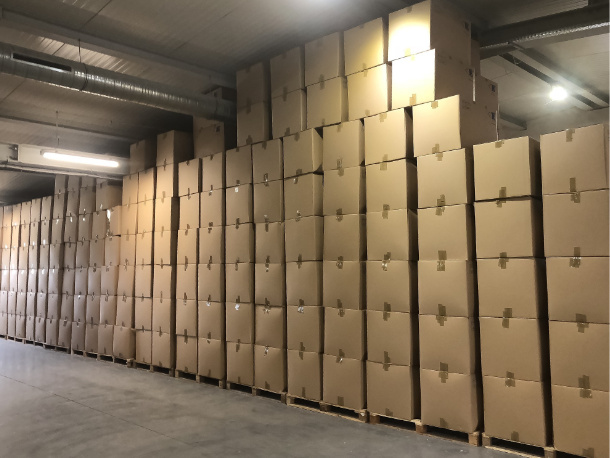
Quick answer: A low-price smart toilet can become slow-moving stock when the product does not match local installation conditions, customer expectations, price positioning, sales channels, or after-sales capability. In this representative case, the distributor focused on unit cost but did not sufficiently verify water pressure, rough-in distance, electrical version, function differentiation, packaging, documentation, and spare-parts support. The result was a product that was inexpensive to purchase but difficult to explain, install, and support.
The following case is an anonymized and representative procurement scenario based on common wholesale risks. It does not describe a named buyer or claim specific sales results. Its purpose is to show why purchase price should be evaluated together with market fit, inventory turnover, installation compatibility, and service cost.
Case Background: A Distributor Chose the Lowest Quotation
Conclusion: The purchasing decision was based mainly on factory price rather than the complete commercial value of the product.
A new distributor wanted to enter the smart toilet category with a price advantage. Several models were compared, and the buyer selected one of the lowest-priced options. The product offered basic washing, seat heating, nozzle cleaning, and flushing functions, while its appearance was similar to other models in the quotation list.
The buyer expected the lower cost to support faster sales. However, the product had no clearly defined customer group, price level, or channel role. It was neither strongly differentiated as an entry model nor sufficiently equipped to compete with better-positioned main-selling models.
Problem One: The Product Position Was Unclear
Conclusion: A low price is not a complete product position unless buyers can explain who the model is for and why customers should select it.
The distributor described the product simply as an affordable smart toilet. However, local customers compared it with conventional toilets, smart toilet seats, and more complete smart toilets. The product’s function and price differences were not clearly communicated.
A wholesale model should normally have a defined role:
- Entry model for customers moving from conventional sanitary ware
- Main-selling model balancing functions, appearance, and price
- Premium model offering visible comfort or automatic features
- Project model emphasizing standardization and maintenance
Without a clear role, sales staff could not explain whether the product was a budget solution, a practical standard model, or a reduced version of a premium product.
Problem Two: Installation Conditions Were Not Fully Verified
Conclusion: A commercially attractive price cannot compensate for drainage, rough-in, water, or electrical incompatibility.
The buyer had confirmed the destination country but had not completed a detailed review of local rough-in distance, water pressure, inlet flow, socket position, and bathroom clearance. Some potential customers required installation conditions different from those of the selected model.
The missing checks included:
- Finished-wall rough-in distance
- Common drainage arrangement
- Water-pressure and flow requirements
- Voltage, frequency, plug, and grounding
- Side and rear installation clearance
- Access for valves, filters, and maintenance
As installers began asking questions, sales staff became less confident in recommending the product. This reduced the number of bathrooms in which the model could be offered without additional verification.
Problem Three: The Function Package Did Not Match Customer Expectations
Conclusion: Removing functions to reduce cost can weaken the product’s selling value if the remaining configuration is not aligned with local demand.
The selected model included core hygiene functions but lacked several features that local customers commonly used to compare smart toilets. The distributor had not determined which functions were essential, which supported the main-selling price level, and which could be omitted safely.
For price-sensitive markets, a simple configuration can be appropriate. However, the product still needs a clear benefit such as easy operation, suitable flushing, stable heating, simple installation, or lower maintenance complexity.
A reduced function list without a strong practical advantage can appear incomplete rather than cost-effective.
Problem Four: The First Order Quantity Was Too Concentrated
Conclusion: A large quantity should not be allocated to an untested model only because the unit price becomes more attractive.
The buyer placed most of the first-order quantity on the low-price model. Only limited samples of alternative configurations were tested. As a result, the distributor had little flexibility when market feedback showed stronger interest in a different function level.
A safer first order could have used a focused but balanced product range, with the largest share assigned only after sample testing, installer feedback, showroom response, and pilot sales supported the decision.
Problem Five: The Sample Was Not Treated as a Commercial Approval Tool
Conclusion: A sample should verify the complete market version, not only product appearance and basic operation.
The sample was reviewed primarily for ceramic appearance and washing functions. Labels, manual language, installation details, carton information, accessory positions, and spare-parts references were not fully approved before the bulk order.
A complete sample review should cover:
- Dimensions, rough-in, and drainage
- Flushing, washing, heating, drying, and controls
- Voltage, plug, cable, and accessories
- Installation and user documents
- Product and carton labels
- Packaging and unpacking condition
- Compatible service parts
Because these items were not confirmed together, the distributor had to prepare additional explanations after the goods arrived.
Problem Six: Sales and Installation Support Was Insufficient
Conclusion: A product becomes harder to sell when sales teams and installers cannot quickly confirm compatibility.
The distributor did not initially have a pre-sale measurement checklist, installation drawing, local-language guide, or simple troubleshooting process. Sales staff had to ask the supplier repeated questions about drainage, pressure, controls, and installation.
Installers also lacked a consistent method for reporting problems. Some complaints did not include the model label, site conditions, photos, or videos, making technical analysis slower.
Problem Seven: Spare Parts Were Not Linked to the Exact Version
Conclusion: Low-cost products still require model-specific spare-parts and after-sales planning.
The buyer expected parts to be ordered only when a problem occurred. However, remotes, sensors, cables, heaters, valves, and control components may differ between technically similar products.
Without a clear connection between the distributor’s commercial model and the supplier’s technical version, service teams could not identify compatible parts immediately. This increased uncertainty around long-term support.
Problem Eight: The True Inventory Cost Was Underestimated
Conclusion: The real cost of slow-moving stock includes more than the original product price.
The distributor had focused on unit cost but had not fully considered warehouse space, financing, local delivery, repacking, sales discounts, installer support, spare parts, and the opportunity cost of unavailable capital.
A low purchase price creates value only when the product can be sold, installed, and supported within a reasonable commercial cycle. If stock remains unsold, the initial price advantage can gradually disappear.
How Could the Buyer Have Reduced the Risk?
Conclusion: The risk could have been reduced through market validation, focused model positioning, and a smaller pilot order.
- Investigate common local installation conditions
- Define the entry, main-selling, premium, or project role
- Compare complete function value rather than function quantity alone
- Approve the final market-specific sample
- Complete local trial installation
- Limit the first quantity until market feedback is available
- Prepare sales, installation, and troubleshooting documents
- Link spare parts to each technical version
How Should Buyers Evaluate the Supplier?
Conclusion: A suitable smart toilet supplier should help the buyer reduce inventory complexity instead of recommending products only by price.
- Clear explanation of target-market compatibility
- Stable and traceable product configurations
- Complete water, drainage, and electrical requirements
- Sample and trial-installation support
- Realistic minimum quantities and lead times
- Consistent labels, manuals, and packaging
- Model-specific spare parts and after-sales guidance
Slow-Moving Stock Prevention Checklist
- Target customers and sales channels defined
- Product role and price level clarified
- Local installation conditions verified
- Functions matched to real customer demand
- Final sample and packaging approved
- First-order quantity kept manageable
- Sales and installer materials prepared
- After-sales parts and procedures confirmed
How AF-KangMu Supports Wholesale Buyers
AF-KangMu works with overseas distributors, wholesalers, bathroom brands, project buyers, and private label partners sourcing smart toilets and related smart bathroom products. Cooperation discussions can cover market positioning, model selection, installation compatibility, function levels, samples, packaging, minimum quantities, market versions, spare parts, and after-sales preparation.
Buyers can provide their destination market, sales channel, installation conditions, target price range, expected quantity, preferred functions, and branding requirements so potential inventory risks can be reviewed before bulk procurement.
Conclusion
The low-price smart toilet in this case became slow-moving stock because price was treated as the main purchasing standard while product positioning, installation, customer demand, order quantity, documentation, and after-sales support were not fully validated.
For wholesale distribution, project procurement, customization, or private label cooperation, contact AF-KangMu to discuss your market, model range, first-order quantity, and inventory-risk control plan.
FAQ
Does a lower purchase price make a smart toilet easier to sell?
Not automatically. Market fit, installation compatibility, product positioning, customer demand, and after-sales support also affect sales.
How can distributors avoid ordering too much stock?
Use final samples, trial installation, installer feedback, pilot sales, and a focused first-order range before increasing quantities.
Should an entry smart toilet have fewer functions?
It may have a simpler configuration, but the remaining functions should be reliable, useful, easy to explain, and suitable for the target market.
What information should be confirmed before bulk purchasing?
Confirm drainage, rough-in, water pressure, voltage, plug, functions, documents, packaging, accessories, and spare-parts compatibility.
Can slow-moving inventory be caused by the supplier alone?
Not always. Inventory risk can result from product selection, market assumptions, order quantity, installation conditions, sales preparation, or supplier execution.