
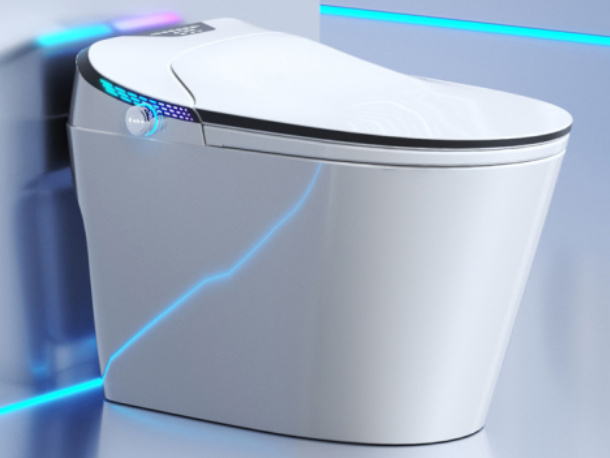
Quick answer: More smart toilet functions are not always better. The right configuration should match the target market, customer expectations, price level, installation conditions, product stability, and local after-sales capability. For distributors, wholesalers, bathroom brands, and project buyers, a practical and serviceable function package often creates more long-term value than a complicated product with many rarely used features.
Smart toilets can include washing, seat heating, warm-air drying, automatic flushing, nozzle cleaning, automatic lid opening, foot-sensor control, night lights, deodorization, display panels, and other functions. A longer feature list may look attractive in a catalog, but every additional function can affect price, component quantity, user training, spare-parts planning, and troubleshooting.
The purpose of smart toilet configuration is not to include every available feature. It is to build a product that customers can understand, installers can fit correctly, distributors can support, and buyers can reorder with confidence.
1. Start with the Target Customer, Not the Feature List
Conclusion: Function selection should begin with the customer group and sales channel.
A showroom distributor may need a visually impressive model that demonstrates automatic functions. A wholesaler may prefer a stable configuration that is easy to explain and replenish. A bathroom brand may need several clearly separated product levels. A project buyer may prioritize standardized operation, installation consistency, and simple maintenance.
Before selecting functions, confirm:
- Target country and customer group
- Wholesale, showroom, brand, or project channel
- Expected purchasing and retail price range
- Local installation and service capability
- Functions customers frequently request
- Functions that may create unnecessary complexity
2. Separate Essential Functions from Optional Features
Conclusion: Essential functions should support hygiene, comfort, flushing, and daily usability.
Common core functions may include rear wash, feminine wash, adjustable water settings, heated seats, nozzle cleaning, warm-air drying, and reliable flushing. These functions are relatively easy to demonstrate and have clear practical value.
Optional features may include automatic lid opening, foot-sensor operation, display panels, additional lighting, deodorization, or multiple automatic modes. Their value depends on market positioning and user expectations.
A smart toilet supplier should help buyers distinguish between functions required for the main sales model and features better suited to premium or showroom products.
3. Consider Whether Customers Can Understand the Functions
Conclusion: A function has limited commercial value when customers cannot easily understand or experience it.
For distributors, sales conversion often depends on simple explanations. Washing, drying, heated seats, automatic flushing, and touch-free controls can be demonstrated quickly. More complicated settings may require longer training and clearer manuals.
When two functions provide similar benefits, buyers should consider whether both are necessary. Removing overlapping features can simplify the remote control, reduce customer confusion, and create a clearer price difference between models.
4. Balance Functions with Product Stability
Conclusion: Every added sensor, motor, control module, or moving component introduces another point that may require testing and service.
This does not mean advanced functions are unreliable by definition. It means buyers should evaluate whether the supplier can maintain consistent component quality, provide clear specifications, and support troubleshooting.
Questions to ask the supplier include:
- Which functions are mature and commonly supplied?
- Which components are used for each function?
- How are the functions checked before shipment?
- Which parts can be replaced locally?
- Are troubleshooting materials available?
For high-volume wholesale or project procurement, a stable configuration with fewer service points may be more suitable than the most complex option.
5. Match Functions to Climate and Local Habits
Conclusion: The value of a function changes according to climate, bathroom habits, and customer expectations.
Heated seats may be especially attractive in colder regions. Warm-air drying may support customers seeking a more complete washing experience. Automatic lid opening and touch-free operation may be suitable for premium channels or selected commercial applications.
In warmer markets, buyers may place greater emphasis on washing, hygiene, nozzle cleaning, flushing, and easy operation. Function selection should be based on actual demand rather than copying the same configuration across all countries.
6. Do Not Ignore Water and Installation Conditions
Conclusion: Functions cannot compensate for a product that does not match local water, drainage, electrical, or space conditions.
Before approving a configuration, confirm water pressure, rough-in distance, drainage type, voltage, frequency, plug type, water inlet position, product dimensions, and service clearance.
Where water pressure is inconsistent, a smart toilet with an integrated water tank may offer a more suitable flushing solution. Tankless products may fit markets with stable water conditions and demand for a compact appearance.
7. Create Clear Product Levels
Conclusion: A structured range is easier to sell than several products with minor and confusing differences.
Buyers can organize products into entry, main-selling, premium, and project configurations. Each level should have a clear customer, price range, and function difference.
A practical structure may include:
- Entry model: Core washing, heating, cleaning, and flushing
- Main-selling model: Core functions plus selected comfort features
- Premium model: Additional automatic and touch-free functions
- Project model: Stable, standardized, and easy-to-maintain configuration
This structure helps distributors explain price differences and prevents too many similar models from dividing inventory.
8. Evaluate After-Sales Requirements Before Ordering
Conclusion: Buyers should understand how each function will be diagnosed and supported after delivery.
Distributors need more than a warranty period. They need manuals, component information, troubleshooting guidance, replacement instructions, and suitable spare parts.
Before adding a complex function, buyers should confirm whether local teams can identify the problem and whether the necessary replacement component is available. A feature that increases sales interest but creates difficult service cases may not be suitable for the main inventory model.
9. Use Samples and Pilot Orders to Validate Configurations
Conclusion: Samples test operation, while pilot orders test market acceptance and service workload.
A sample can confirm appearance, controls, washing, heating, drying, sensors, flushing, installation, and documentation. A pilot order provides more information about customer response, installer feedback, quality consistency, and after-sales questions.
For private label cooperation, buyers can first verify the standard function package before investing in multiple customized versions.
10. Smart Toilet Configuration Selection Checklist
- Target customer and sales channel identified
- Essential and optional functions separated
- Functions match local climate and habits
- Water, drainage, voltage, and installation conditions checked
- Product levels have clear price and function differences
- Supplier quality and component controls reviewed
- Manuals, spare parts, and troubleshooting support confirmed
- New configurations validated through samples or pilot orders
How AF-KangMu Supports Configuration Planning
AF-KangMu works with overseas distributors, wholesalers, bathroom brands, project buyers, and private label partners sourcing smart toilets and related smart bathroom products. Cooperation discussions can cover function combinations, water tank options, voltage and plug versions, installation requirements, product positioning, packaging, manuals, and spare-parts planning.
Buyers can provide their target market, sales channel, price range, preferred functions, installation conditions, estimated quantity, and customization requirements so a practical product configuration can be reviewed before sample and order confirmation.
Conclusion
More smart toilet functions do not automatically mean a better product or a stronger purchasing decision. The correct configuration balances customer demand, price, stability, installation, inventory, and after-sales capability.
For wholesale, distribution, project procurement, customization, or private label cooperation, contact AF-KangMu to discuss your target market, required functions, estimated quantity, and product positioning.
FAQ
Which smart toilet functions are most important for wholesale buyers?
Wholesale buyers often prioritize washing, heated seats, drying, nozzle cleaning, reliable flushing, and functions that are easy to explain and maintain.
Do more functions make a smart toilet more expensive?
Additional functions may increase component, assembly, testing, documentation, and service costs. The actual impact depends on the selected configuration.
Should project buyers choose fewer functions?
Project buyers should prioritize stable, standardized, and practical functions. Additional features can be included when they support the project positioning and maintenance plan.
How can distributors create different product levels?
They can separate entry, main-selling, premium, and project models according to price, essential functions, comfort features, automation, and serviceability.
How should buyers test a new configuration?
Approve a complete sample, complete installation and function tests, and use a pilot order to evaluate market response, batch consistency, and after-sales requirements.