
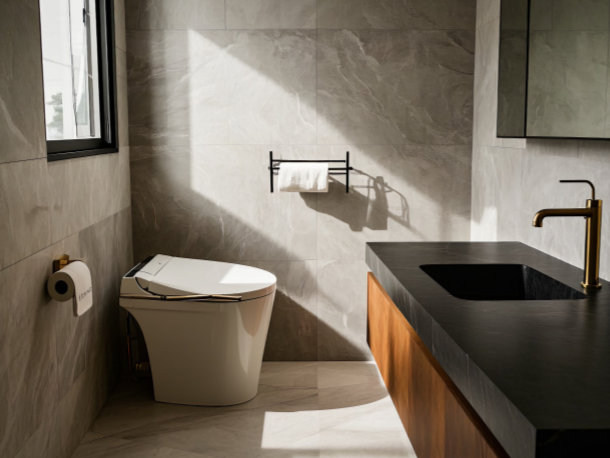
Quick answer: A smart toilet with a heated seat provides adjustable warmth that significantly improves user comfort, making it a high-demand feature in many markets. For B2B buyers, sourcing these products successfully means looking beyond surface specs. You need to evaluate the heating technology, safety certifications, supplier reliability, customization capabilities, and after-sales support. This guide helps importers, distributors, sanitary ware brands, and project buyers make a confident choice when selecting a supplier for smart toilets with heated seats.
Smart Toilet with Heated Seat: What B2B Buyers Need to Know
Why heated seats matter in smart toilet procurement
For distributors and wholesalers, a heated seat is no longer just a premium add‑on. It has become a competitive necessity, especially in regions with cold winters or markets where comfort‑driven bathroom upgrades are on the rise. Adding models with reliable heated seats to your product portfolio can help increase average order value and meet the expectations of both residential and commercial project clients.
For sanitary ware brand owners, a smart toilet with a heated seat offers a clear opportunity to differentiate. The feature gives end users an immediate sense of comfort and perceived quality, which directly influences purchase decisions. This makes it a strategic category for building a modern bathroom collection.
Key features to evaluate in a smart toilet with heated seat
Not all heated seats perform the same way. When comparing products from different suppliers, pay attention to these technical and functional aspects.
Temperature control and heating method
Look for multi‑level temperature adjustment, usually three to five settings, so users can personalize comfort. Instant heating systems that warm the seat surface quickly while maintaining energy efficiency are generally more desirable than slow, constant‑power heating. The heating element design also affects durability and consistent warmth over years of use.
Safety and material quality
Always confirm that the seat includes overheat protection and uses flame‑retardant materials. The surface material should be smooth, easy to clean, and resistant to yellowing or scratches. For B2B buyers, safety certification is critical: verify that the product meets the electrical safety and material standards required in your target market, such as CE, UKCA, or equivalent local approvals.
Energy efficiency and smart controls
A practical smart toilet with heated seat should include an energy‑saving mode, such as a scheduled heating function or an occupancy sensor that lowers the temperature when not in use. Integration with the main control panel or remote is also important for a seamless user experience.
How to assess a reliable smart toilet supplier
For importers and wholesalers, supplier selection is often more important than the product itself. A reliable partner ensures consistent quality, on‑time deliveries, and minimal after‑sale issues.
- Production consistency: Check whether the supplier maintains strict quality control across batches. Consistent performance of the heating element, seat sensor, and electronic controller is a must.
- International compliance experience: The supplier should be able to provide clear documentation and adapt to different electrical, water pressure, and certification requirements.
- Sample policy and communication: Evaluate how transparent the supplier is during the sampling stage. A professional partner will provide detailed technical data and discuss potential custom adjustments openly.
Customization and OEM partnerships for brand differentiation
For sanitary ware brand owners and large distributors, off‑the‑shelf products are rarely enough. This is where customization becomes essential.
A smart toilet with a heated seat can be tailored in several ways: custom seat colors, logo placement on the remote and body, packaging design, and even specific heating logic or energy‑saving profiles. Being able to adjust features allows your brand to stand out without developing a product from scratch.
When discussing custom manufacturing with a supplier, clarify minimum order quantities, lead times for tooling modifications, and who owns the custom mold or software configuration. AF‑KangMu works with clients on flexible terms that respect both brand identity and supply chain efficiency.
Installation, voltage and global compatibility
One of the most common challenges for international buyers is ensuring the product fits local installation environments. A smart toilet with heated seat must be compatible with the electrical standards and plumbing setups in the destination country.
- Voltage and plug types: Confirm that the supplier can provide models for 110‑120V and 220‑240V systems, with the appropriate plug standards.
- Water pressure range: Some markets have low water pressure; others have high pressure. The internal valve system must work reliably within the specified range.
- Space and dimensions: Rough‑in measurements and overall dimensions should match common bathroom layouts. Providing clear installation guides and technical drawings to your customers reduces pre‑sale questions.
After‑sales support and maintenance
For long‑term business, after‑sales capability is non‑negotiable. When buying smart toilets with heated seats, ask the supplier about spare parts availability, especially for the heating element, control board, and seat sensor. A structured technical support process—including troubleshooting manuals, video guidance, and clear warranty terms—protects your reputation with end users.
Distributors should also request a recommended spare parts list to keep in local stock. This reduces downtime and service costs.
A quick sourcing checklist
- Does the heated seat offer at least three adjustable temperature levels with overheat protection?
- Has the supplier provided valid safety and material certifications for your target market?
- Is the heating element and electronic module proven for long‑term reliability?
- Can the supplier customize the seat color, remote, packaging, or software features?
- Are installation requirements compatible with your market’s electrical and plumbing standards?
- What is the spare parts supply policy and technical support workflow?
FAQ
What heating technology is commonly used in smart toilets with heated seats?
Most models use an electric heating element embedded in the seat, often combined with a temperature sensor and control module. Higher‑quality designs use instant heating circuits for fast warm‑up and maintain consistent surface temperature through intelligent power regulation.
Can I get a custom design for a smart toilet with heated seat to match my brand?
Yes. Many suppliers, including AF‑KangMu, offer customization options such as brand‑specific colors, logo printing, custom remote control interfaces, and packaging. Discuss your requirements early to align on feasibility and lead times.
How do I ensure the heated seat feature stays reliable in different climates?
Choose a supplier that tests its products under a range of ambient temperature and humidity conditions. Reliable heated seats are built with sealed heating elements and proper insulation. Also, request accelerated aging test reports or field performance data to confirm durability.
If you are looking for a dependable partner for smart toilets with heated seats, contact AF‑KangMu today. We provide consistent product quality, flexible customization, and dedicated support for distributors, wholesalers, brand owners and project buyers worldwide.