
Quick answer: Before importing smart toilets, B2B buyers should confirm 10 questions: Is the product suitable for the target market? Does it match local drainage and rough-in conditions? Are water pressure and flow suitable? Is the voltage, frequency, plug, and grounding version correct? Which functions are standard? What are the MOQ and pricing conditions? What can be customized? How will the product be packed and shipped? How will bulk quality be inspected? And what after-sales and spare-parts support will be available? These questions should be answered before a large order is released.
For distributors, wholesalers, bathroom brands, project buyers, and private label partners, importing smart toilets involves technical, commercial, installation, logistics, and service decisions at the same time. A product can look attractive and still become difficult to sell if it does not match local plumbing, electrical conditions, price positioning, or service capability. The following 10 questions form a practical import checklist rather than a statistical ranking.
1. Is the Smart Toilet Suitable for the Target Market?
Conclusion: Product selection should begin with the destination market rather than the supplier catalog.
Buyers should define the intended customer, sales channel, price level, bathroom type, local installation habits, and service expectations before selecting models. A distributor selling through retail dealers may need a different product mix from a hotel or apartment project.
Useful market questions include:
- Is the product for retail, wholesale, or projects?
- Which price segment is targeted?
- Which functions matter most locally?
- What installation conditions are common?
- What level of local after-sales support is available?
2. Do Drainage and Rough-In Dimensions Match Local Bathrooms?
Conclusion: Installation compatibility should be confirmed before bulk procurement because an unsuitable ceramic structure cannot be corrected by adding more functions.
Buyers should verify floor or wall drainage, finished-wall rough-in distance, drain-center position, overall dimensions, water-valve location, electrical outlet position, and maintenance clearance.
For project orders, drawings should be checked against actual site conditions, and a representative trial installation is strongly recommended before large quantities are released.
3. Are Water Pressure and Inlet Flow Suitable?
Conclusion: Both water pressure and flow should be reviewed because they affect flushing and washing performance differently.
Direct-water-supply models normally depend more directly on real-time water conditions. Integrated-tank models store water before flushing and may be worth evaluating where pressure fluctuates, but they still require inlet water for refilling and washing functions.
Buyers should test representative local conditions instead of relying only on general building pressure information.
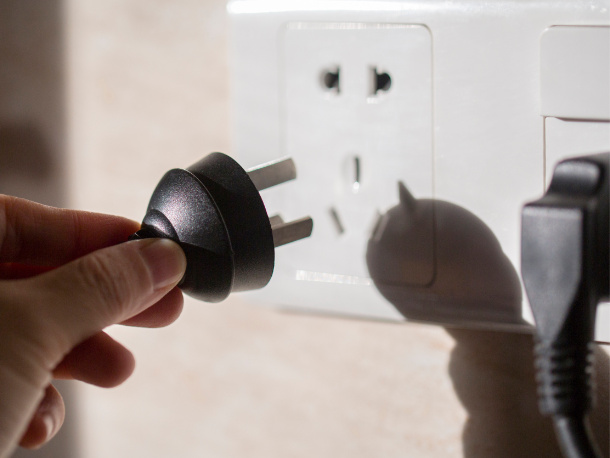
4. Is the Electrical Version Correct?
Conclusion: Voltage, frequency, plug type, cable, grounding, and internal electrical configuration should be confirmed as one market version.
A plug adapter only changes the physical connection. It does not convert an unsuitable internal voltage configuration. Multi-country buyers should therefore separate electrical versions clearly in product codes, labels, cartons, warehouse records, and repeat orders.
Final bathroom electrical installation should follow applicable local requirements and qualified professional review.
5. Which Functions Are Standard and Which Are Optional?
Conclusion: Buyers should compare the actual function package rather than the total number of advertised features.
Common functions may include rear wash, feminine wash, nozzle adjustment, nozzle self-cleaning, heated seat, water-temperature adjustment, warm-air drying, automatic flushing, foot sensing, automatic lid, lighting, and deodorization.
For distributors, entry, main-selling, and premium models should have clear differences. For projects, practical operation and maintenance may be more important than adding every available feature.
6. What Are the MOQ, Quantity Tiers, and Commercial Terms?
Conclusion: Unit price should be evaluated together with the actual purchasing quantity and what is included.
Buyers should confirm sample terms, MOQ, quantity-based pricing, accessories, standard packaging, customization charges, payment conditions, and the agreed shipping scope.
Customized cartons, labels, manuals, or special components may have separate minimum quantities from the finished smart toilet. These requirements should be clarified before the purchase order is finalized.
7. What Can Be Customized for Private Label Cooperation?
Conclusion: Customization should be controlled as one complete product version rather than a collection of separate branding files.
Private label cooperation may involve logos, commercial model names, product labels, manuals, cartons, remote-control graphics, function packages, plug versions, and installation accessories.
Buyers should ask how customization affects MOQ, lead time, cost, testing, spare parts, and repeat-order traceability.
8. How Will the Smart Toilets Be Packaged and Shipped?
Conclusion: Export packaging and logistics should be reviewed before production is complete.
Smart toilet packaging should protect the ceramic body, seat cover, electronic parts, remote control, and installation accessories. Buyers should obtain final carton dimensions and gross weight before planning freight or container quantities.
For mixed-model orders, carton size, weight, version identification, stacking arrangement, and unloading sequence should also be considered.
9. How Will Bulk Quality Be Inspected Before Shipment?
Conclusion: Pre-shipment inspection should confirm both product performance and consistency with the approved version.
Important inspection areas include:
- Ceramic appearance and key dimensions
- Flushing and washing functions
- Heating, drying, sensors, and controls
- Voltage, plug, labels, and manuals
- Installation accessories
- Packaging and carton identification
The final goods should be compared with the approved sample, purchase specification, and private label files where applicable.
10. What After-Sales and Spare-Parts Support Is Available?
Conclusion: Importers should prepare service capability before local sales begin.
Buyers should ask about troubleshooting information, warranty procedures, model-specific spare parts, replacement guidance, and technical communication. Remote controls, sensors, valves, cables, washing components, and control parts may differ between technical versions.
Spare parts should therefore be identified by exact model and market version rather than by appearance alone.
How Should Distributors Choose Their First Import Product Range?
Conclusion: A focused range with clear commercial roles is usually easier to test and support than many similar models.
Distributors can consider an entry model, a main-selling model, a premium model, and a project-oriented configuration where relevant. The exact mix should depend on local demand, installation conditions, dealer coverage, warehouse capacity, and price positioning.
Samples and smaller pilot quantities can help buyers collect real market feedback before expanding inventory.
What Documents Should Buyers Request Before Ordering?
Conclusion: Technical and commercial documents should be reviewed before the order becomes difficult to change.
- Product specification
- Dimensional and installation drawings
- Function list
- Water and electrical requirements
- Accessory list
- Packaging information
- Manual or installation instructions
- Quotation and commercial terms
How Should Buyers Evaluate the Supplier?
Conclusion: A suitable smart toilet supplier should help buyers reduce uncertainty before shipment rather than only provide a low quotation.
Buyers should evaluate whether the supplier can provide clear specifications, stable market versions, sample approval, customization control, transparent quotation terms, export packaging, pre-shipment inspection, spare-parts references, and after-sales communication.
Smart Toilet Import Checklist
- Target market and product positioning confirmed
- Drainage and rough-in verified
- Water pressure and flow reviewed
- Electrical market version approved
- Functions and model mix defined
- MOQ and commercial terms confirmed
- Customization and packaging approved
- Inspection, spare parts, and after-sales prepared
How AF-KangMu Supports Import Buyers
AF-KangMu works with overseas distributors, wholesalers, bathroom brands, project buyers, and private label partners sourcing smart toilets and related smart bathroom products. Cooperation discussions can cover product selection, installation conditions, water and electrical versions, functions, samples, quantities, customization, packaging, container planning, quality inspection, spare parts, and after-sales preparation.
Buyers can provide the destination market, expected quantity, product positioning, installation conditions, electrical requirements, branding needs, and shipping plan so the purchasing scope can be reviewed before sample and bulk procurement.
Conclusion
Importing smart toilets successfully requires more than finding a product and negotiating a unit price. Market fit, installation, water conditions, electrical versions, functions, quantities, customization, packaging, inspection, and after-sales support should all be confirmed before bulk production.
For wholesale distribution, project procurement, customization, or private label cooperation, contact AF-KangMu to discuss your destination market, selected models, quantities, and smart toilet import requirements.
FAQ
What should buyers confirm first before importing smart toilets?
Start with the destination market, installation conditions, water supply, electrical version, target price level, and intended sales channel before selecting the final models.
Is the lowest smart toilet quotation always the best option?
No. Buyers should compare the same functions, electrical versions, accessories, packaging, quantities, customization, delivery scope, and after-sales support.
Should buyers order samples before bulk import?
Yes. Samples can help verify functions, installation, water conditions, electrical versions, accessories, packaging, and overall market suitability before larger quantities are released.
What is the biggest risk when importing different country versions?
Mixed voltage, plug, language, labels, manuals, or spare parts can create installation and after-sales problems, so each market version should be clearly controlled.
When should spare-parts planning begin?
It should ideally begin before or together with the first bulk order so the selected spare parts match the actual production version.