Quick answer: Slow-moving smart toilet inventory is commonly caused by 10 issues: unclear product positioning, too many similar models, choosing mainly by low purchase price, installation mismatch, unsuitable water-supply configuration, incorrect voltage or plug versions, unbalanced function and price levels, excessive private label customization, weak product information and sales support, and buying quantities that do not match real market demand. Distributors can reduce inventory risk by building a smaller and clearer product range, validating installation and market versions, and using actual sales feedback to guide repeat orders.
For distributors, wholesalers, bathroom brands, project buyers, and private label partners, slow inventory does not always mean that smart toilets are unsuitable for the market. Sometimes the real problem is that the purchased model, price position, technical version, or sales presentation does not match the intended customer. The following 10 causes are practical inventory-management risks rather than a statistical ranking.
1. The Product Has No Clear Market Position
Conclusion: A smart toilet becomes harder to sell when buyers cannot explain who it is for and why it should be chosen.
A product range should normally have clear roles such as entry, main-selling, premium, or project-oriented models. If every model is described simply as a “smart toilet with many functions,” distributors may struggle to explain the differences.
For each model, define:
- Target customer
- Expected price level
- Main selling functions
- Installation conditions
- Role within the product range
2. Too Many Similar Models Are Ordered
Conclusion: Similar models can divide demand instead of increasing total sales.
Distributors sometimes order several smart toilets with nearly identical appearance, functions, and pricing. This spreads inventory across more cartons, model codes, remotes, manuals, and spare parts without giving customers a meaningful reason to choose one over another.
A focused range with visible differences is generally easier for sales teams and dealers to understand.
3. The Model Was Selected Mainly Because of Low Purchase Price
Conclusion: A low factory price does not automatically create a fast-selling product.
A lower-priced model may still move slowly if its appearance, functions, flushing structure, installation requirements, or perceived value do not fit the local market.
For wholesalers, purchase price should be evaluated together with market positioning, selling price, installation compatibility, packaging, service needs, and expected turnover.
4. Installation Specifications Do Not Match the Market
Conclusion: A model with limited installation compatibility can remain in stock even when customers like its appearance and functions.
Rough-in distance, drainage type, product dimensions, water-valve position, outlet location, and bathroom clearance can all affect whether the product can actually be installed.
Before bulk procurement, distributors should confirm the common installation conditions in the destination market and provide clear measurement guidance to dealers and customers.
5. The Water-Supply Configuration Is Unsuitable
Conclusion: Water pressure and inlet flow can directly affect which smart toilet configuration is practical for a market.
Direct-water-supply models generally depend more directly on real-time water pressure and flow. Integrated-tank models store water before flushing and may be worth evaluating where inlet conditions fluctuate, but they still require water for refilling and washing functions.
Buyers should validate representative local conditions instead of assuming one water-supply structure fits every region.
6. The Wrong Voltage or Plug Version Was Purchased
Conclusion: Electrical-version mistakes can make otherwise suitable inventory difficult or unsafe to sell into the intended market.
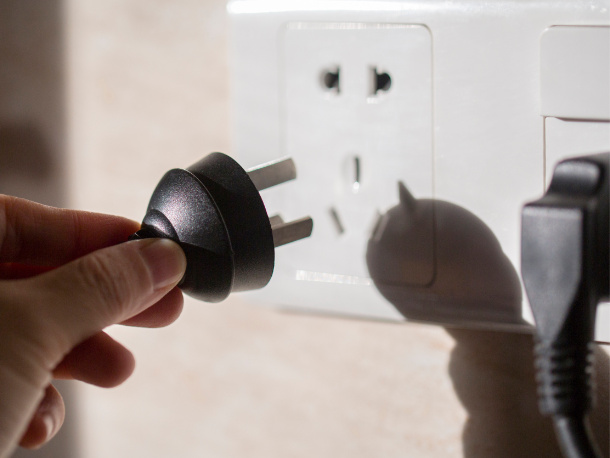
Voltage, frequency, plug type, grounding, cable, labels, manuals, and internal electrical configuration should be treated as one market version. A plug adapter cannot convert an unsuitable internal voltage configuration.
Multi-country distributors should separate inventory by technical version instead of relying on similar product appearance.
7. The Function and Price Structure Is Unbalanced
Conclusion: Inventory can move slowly when buyers offer too many high-cost functions or too little visible value at a given price.
Rear wash, feminine wash, heated seat, drying, automatic flushing, foot sensing, automatic lid, lighting, and deodorization all affect product positioning. More functions are not automatically better.
For distributors, the main-selling model should usually offer a function package that customers can understand and that sales teams can explain easily.
8. The First Order Was Over-Customized
Conclusion: Deep customization before market validation can turn unsold products into difficult-to-reallocate inventory.
Private label buyers may customize logos, commercial model names, cartons, manuals, remote graphics, functions, accessories, and electrical versions at the same time. If the model sells slowly, strongly customized stock may be harder to redirect to another channel or market.
A more controlled first order can prioritize branding and essential market compatibility before expanding deeper customization.
9. Product Information Is Too Weak to Support Sales
Conclusion: A technically suitable smart toilet may still move slowly if dealers and customers cannot understand its value or installation requirements.
Distributors should have clear product pages, dimensions, function explanations, water and electrical requirements, installation information, comparison points, manuals, and suitable images or videos.
For bathroom brands, unclear documentation also makes it harder for dealers to recommend the correct model.
10. Order Quantity Does Not Match Real Sales Demand
Conclusion: Even a good smart toilet can become slow-moving inventory when the first order is too large for the available sales channels.
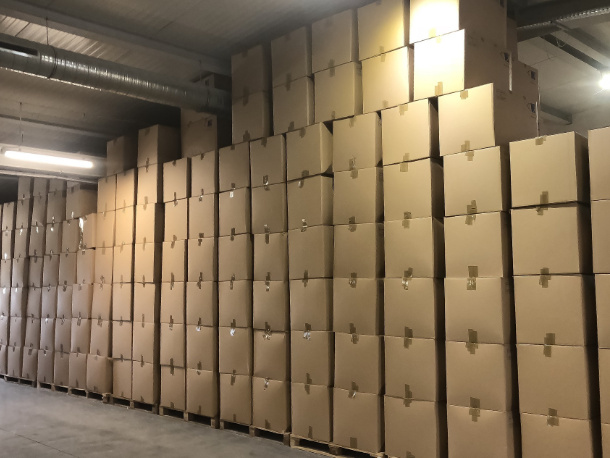
Container utilization should not be the only reason to increase quantities. Buyers should consider dealer coverage, showroom needs, sales history, expected project demand, warehouse capacity, model mix, and repeat-order lead time.
Filling remaining container space with additional models can reduce freight cost per shipment but may increase inventory risk if those models have no clear demand.
How Should Distributors Build a Better Product Mix?
Conclusion: Product ranges should be built around clear roles instead of maximizing the number of models.
- Entry model for price-sensitive demand
- Main-selling model for the widest target group
- Premium model for higher comfort and automation
- Project model where installation and maintenance consistency matter
The exact mix should reflect local demand rather than a fixed universal ratio.
Which Inventory Problems Can Be Prevented Before Ordering?
Conclusion: Many inventory risks can be reduced during model selection and sample approval.
Buyers should validate installation conditions, water supply, voltage, plug, function package, selling position, packaging, manuals, and after-sales parts before releasing bulk quantities.
Small pilot orders, dealer feedback, and sample installations can also provide evidence before inventory is expanded.
How Should Buyers Evaluate the Supplier?
Conclusion: A suitable smart toilet supplier should help buyers select a manageable product range rather than simply provide the largest possible catalog.
- Clear differences between models
- Market and installation guidance
- Stable technical versions
- Transparent quotation and quantity tiers
- Controlled customization
- Complete product information
- Spare-parts and after-sales support
Slow-Moving Inventory Prevention Checklist
- Each model has a clear market position
- Similar models have been reduced
- Installation conditions are verified
- Water and electrical versions match the market
- Function and price levels are clearly separated
- Customization remains manageable
- Product information supports dealer sales
- Order quantities reflect realistic demand
How AF-KangMu Supports B2B Buyers
AF-KangMu works with overseas distributors, wholesalers, bathroom brands, project buyers, and private label partners sourcing smart toilets and related smart bathroom products. Cooperation discussions can cover product-range planning, model positioning, functions, installation conditions, water and electrical versions, samples, customization, packaging, container loading, spare parts, and after-sales preparation.
Buyers can provide the destination market, target customer groups, selected models, expected quantities, price positioning, installation conditions, branding needs, and sales channels so the product mix can be reviewed before bulk procurement.
Conclusion
Slow-moving smart toilet inventory is often a product-selection and procurement problem before it becomes a sales problem. Clear model positioning, controlled product variety, correct market versions, practical functions, useful product information, and realistic quantities can make inventory easier to manage.
For wholesale distribution, project procurement, customization, or private label cooperation, contact AF-KangMu to discuss your target market, product range, quantities, and smart toilet sourcing plan.
FAQ
Why do low-priced smart toilets sometimes sell slowly?
Low purchase price alone does not guarantee market fit. Installation conditions, appearance, functions, perceived value, electrical versions, and local selling price also influence demand.
How many smart toilet models should a new distributor carry?
There is no universal number. A focused range with clearly different commercial roles is usually easier to test, stock, explain, and support.
Can too much customization increase inventory risk?
Yes. Highly customized products and packaging can be harder to redirect if demand is lower than expected.
Should buyers fill every remaining space in a container?
Not necessarily. Additional products should have a clear sales purpose rather than being added only to maximize container utilization.
What should distributors verify before increasing repeat-order quantities?
Review sales by model, dealer feedback, installation issues, return or service questions, market versions, stock levels, and the performance of each product position.