
Quick answer: Smart toilets for hotel and apartment projects should meet 10 practical requirements: correct drainage and rough-in distance, suitable water pressure and flow, reliable flushing structure, correct voltage and plug version, practical guest functions, repeatable installation, easy maintenance access, complete project documentation, controlled delivery and version management, and model-specific spare-parts support. Project buyers should evaluate these items before approving bulk quantities because one small mismatch can be repeated across many rooms.
For distributors, wholesalers, bathroom brands, project buyers, and private label partners, hotel and apartment procurement is different from ordinary retail purchasing. A retail customer may compare one unit, while a project buyer must install, operate, clean, maintain, and replace many units under similar conditions. The following 10 requirements are practical project-selection criteria rather than a statistical ranking.
1. Correct Drainage and Rough-In Distance
Conclusion: The selected smart toilet must match the actual drainage structure and finished-wall rough-in distance.
Project buyers should confirm floor or wall drainage, drain-center position, finished-wall dimensions, ceramic clearance, and connection method. Waterproofing, tiles, wall panels, and other finishes can change the usable installation distance.
Before approval, check:
- Floor or wall drainage
- Finished-wall rough-in distance
- Drain-center alignment
- Rear and side clearance
- Connection method
For repeated room layouts, drawings should be compared with actual site measurements before large quantities are released.
2. Suitable Water Pressure and Inlet Flow
Conclusion: Water pressure and flow should be verified under representative building conditions.
Hotels and apartment buildings may have different water conditions between low floors, high floors, remote branches, and peak-use periods. General building pressure does not always represent the actual toilet connection.
Buyers should measure both pressure and flow because a connection can show pressure while still delivering insufficient water during operation.
3. Reliable Flushing Structure
Conclusion: Flushing performance should match the building’s actual water conditions and expected usage.
Integrated-tank smart toilets store water before flushing and may provide more adaptability where inlet conditions fluctuate. Direct-water-supply models depend more directly on real-time pressure and flow. Neither structure is universally better; the correct choice depends on the site.
Buyers should also distinguish the water-supply structure from siphonic or washdown waste-removal principles.
4. Correct Voltage, Frequency, Plug, and Grounding
Conclusion: The electrical version must match the destination market and project electrical plan.
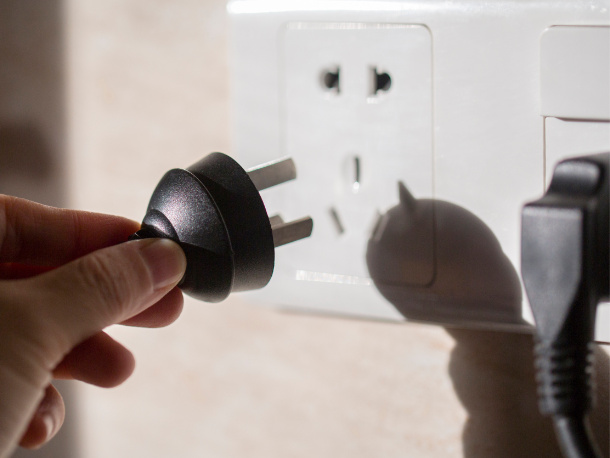
Voltage, frequency, plug, cable, grounding, and internal power-related components should be treated as one complete market configuration. A plug adapter cannot correct an unsuitable internal voltage version.
Outlet position should also be reviewed so it does not interfere with water valves, ceramic installation, cleaning, or maintenance. Final electrical work should follow applicable local requirements and qualified professional review.
5. Practical Guest and Resident Functions
Conclusion: Project models should prioritize functions that are easy to understand and useful in daily operation.
Common project functions include:
- Rear wash and feminine wash
- Water-temperature and pressure adjustment
- Nozzle-position adjustment and self-cleaning
- Heated seat
- Warm-air drying
- Reliable flushing
- Clear remote or side-panel controls
Automatic lids, foot sensors, displays, night lighting, and deodorization may support premium rooms, but additional sensors and moving parts also increase inspection and maintenance requirements.
6. Repeatable and Easy Installation
Conclusion: A suitable project model should allow the same installation process to be repeated across many rooms.
Dimensions, fixing positions, drainage, water connections, outlet locations, accessory kits, and installation steps should remain consistent. A small dimensional or accessory difference can create repeated site work when multiplied across a project.
A representative trial installation is strongly recommended before large-scale deployment.
7. Easy Maintenance and Service Access
Conclusion: The smart toilet should remain serviceable after installation, not only fit during initial construction.
Maintenance teams may need access to valves, filters, hoses, electrical connections, remotes, sensors, washing components, and selected control parts. Concealed systems should provide suitable service access.
For apartment operators and hotel maintenance teams, serviceability can be as important as the initial function list.
8. Complete Project Documentation
Conclusion: Project buyers need installation and service documents that match the exact installed version.
Useful documents include:
- Dimensional and installation drawings
- Water and electrical requirements
- Accessory lists
- Installation manuals
- Function instructions
- Basic troubleshooting guidance
- Spare-parts references
For private label projects, commercial model names should remain linked to the supplier’s technical version so future maintenance remains traceable.
9. Controlled Project Versions and Phased Delivery
Conclusion: Different delivery batches should remain technically consistent with the approved project version.
Apartment and hotel projects may be delivered by floor, building, room group, or construction phase. Every batch should identify the model, version, quantity, accessories, labels, manuals, and packaging.
Phased delivery can reduce on-site storage and repeated handling, but it requires clear production, inspection, and change control. Later batches should not change silently after the first installation has been approved.
10. Spare Parts and After-Sales Support
Conclusion: Local maintenance should be planned before the project is handed over.
Remote controls, hoses, seals, valves, sensors, cables, washing parts, and selected control components may require model-specific references. Spare parts should be linked to the exact technical version rather than selected by appearance.
Project buyers should also define how service cases are reported, what information is required, and which components can reasonably be replaced locally.
How Should Hotels and Apartments Choose Between Standard and Premium Configurations?
Conclusion: Standard rooms should prioritize stable, understandable functions, while premium rooms can add visible comfort and automation.
A practical project may use one standard configuration for most rooms and a higher-level version for suites or show apartments. The difference should be easy for users and maintenance teams to understand.
Using too many configurations can increase inventory, installer training, spare-parts, and version-management complexity.
What Should Be Tested in a Trial Room?
Conclusion: Trial installation should verify the complete relationship between product, room, utilities, and maintenance.
- Drainage and rough-in alignment
- Water pressure and inlet flow
- Electrical outlet and cable position
- Flushing and washing functions
- Remote-control position
- Cleaning clearance
- Maintenance access
- Installation accessories
How Should Buyers Evaluate the Supplier?
Conclusion: A suitable smart toilet supplier should support the complete project process rather than only quote a product.
- Clear dimensional and installation information
- Stable project versions
- Sample and trial-installation support
- Consistent accessories and documentation
- Packaging and phased-delivery planning
- Written change management
- Model-specific spare parts and troubleshooting
Hotel and Apartment Project Checklist
- Drainage and rough-in verified
- Water pressure and flow measured
- Flushing structure selected for site conditions
- Electrical version confirmed
- Functions kept practical
- Trial installation completed
- Maintenance access and documents prepared
- Delivery and spare-parts plan confirmed
How AF-KangMu Supports Project Buyers
AF-KangMu works with overseas distributors, wholesalers, bathroom brands, project buyers, and private label partners sourcing smart toilets and related smart bathroom products. Cooperation discussions can cover project model selection, drainage, rough-in distance, water conditions, flushing structures, electrical versions, functions, installation drawings, samples, packaging, phased delivery, customization, and spare-parts planning.
Buyers can provide project drawings, room quantities, installation conditions, water and electrical information, preferred functions, branding needs, and delivery schedules so a suitable project configuration can be reviewed before bulk procurement.
Conclusion
Smart toilets for hotels and apartments should be selected for repeatable installation, reliable flushing, practical operation, manageable maintenance, controlled delivery, and long-term after-sales support. The best project configuration is not necessarily the one with the most functions, but the one that can be installed and supported consistently across the property.
For hotel, apartment, residential, wholesale, customization, or private label projects, contact AF-KangMu to discuss your drawings, room quantities, installation conditions, product requirements, and delivery plan.
FAQ
What are the most important requirements for hotel smart toilets?
Key requirements include installation compatibility, reliable flushing, practical functions, correct electrical configuration, easy maintenance, consistent documentation, and spare-parts support.
Are integrated-tank smart toilets always better for apartments?
No. They may be useful in some fluctuating-pressure conditions, but actual pressure, flow, refill performance, installation space, and project requirements should still be tested.
Should hotel projects use the smart toilet with the most functions?
Not necessarily. Standard rooms often benefit more from stable, simple, and maintainable functions, while premium features can be reserved for higher-level room types.
Is trial installation necessary before a bulk project order?
It is strongly recommended because it can reveal drainage, water, electrical, clearance, accessory, and maintenance issues before they are repeated across many rooms.
What information should project buyers provide to the supplier?
Useful information includes project drawings, room quantities, drainage and rough-in details, water pressure and flow, electrical requirements, functions, branding needs, and delivery stages.